We believe healthy soil grows everything, from more vibrant flowers to more nutrient-dense food to a deeper connection to the land we live on, and we're here to show that growing in good soil is something everyone can do.
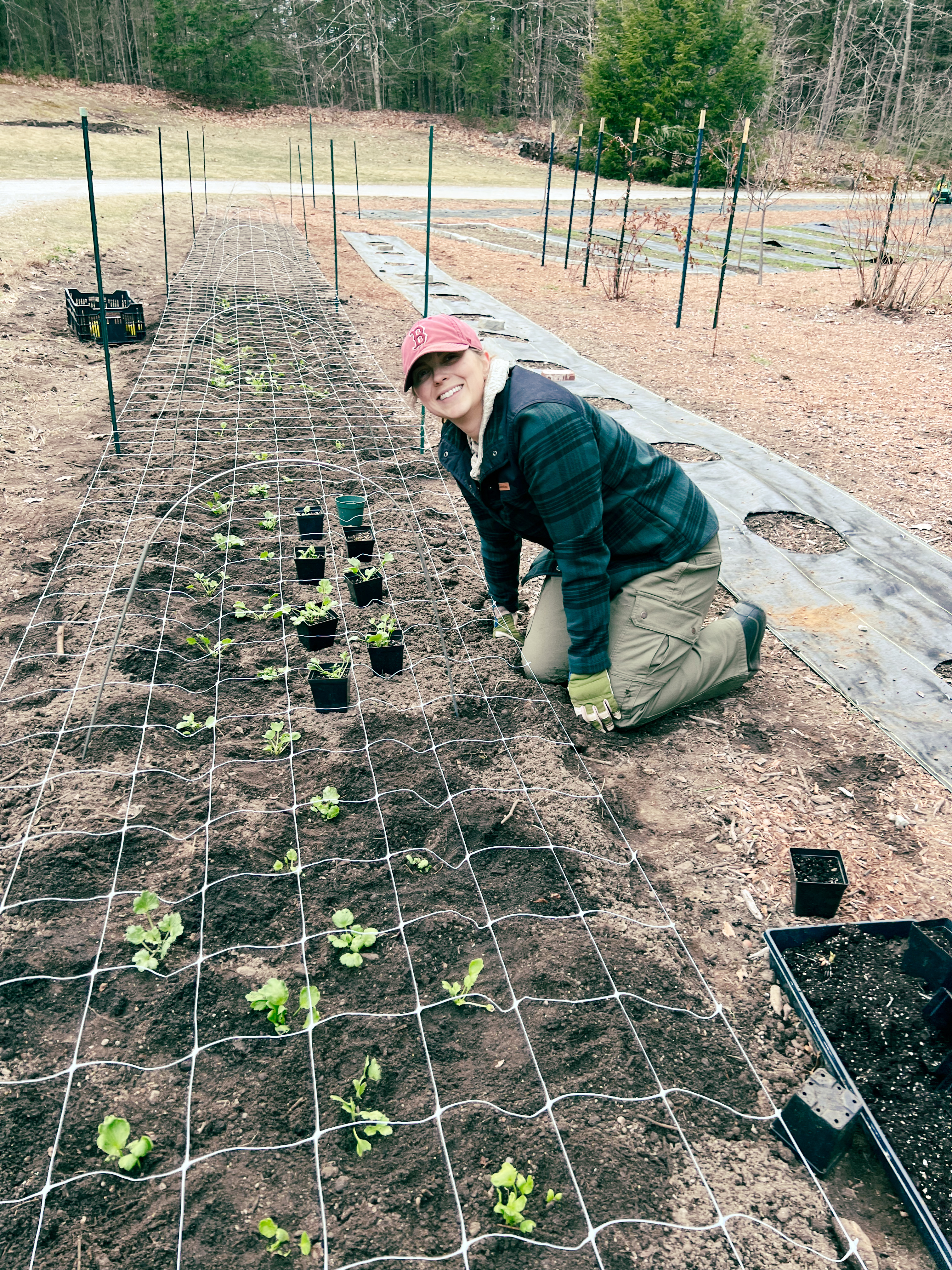
I didn't set out to be a flower farmer. I started noticing how disconnected people had become, from the earth, from their food, and from themselves. The more I sat with that, the more I kept arriving at the same place: the soil. I really believe that if more people put their hands in the dirt, something would shift. Not just in their garden, but in them.
That belief is what built this farm.
In Good Soil Flower Co. grows specialty cut flowers, edible flowers, and microgreens in Dunbarton, New Hampshire. We're proud to be certified organic, and everything here is grown with a commitment to soil first. Healthy soil doesn't just grow better flowers, it grows healthier food, cleaner water, and a more resilient life.
Too many people have been told that growing is complicated, or expensive, or not for them. It's not true. And I think the same thing has happened with flowers. Somewhere along the way they became a special occasion thing, a splurge, something you justify. I don't think it has to be that way. Flowers on the table, fresh ones from a farm down the road, that should just be a normal part of life. That's what we're working toward.
I'm learning out loud, on purpose. I experiment, I fail, and I'm sharing it all.
Welcome to In Good Soil Flower Co.